Thankful Turkey Craft: One Free Printable, Not Three Crafts
Print both turkey bodies and every kid at your table works from one free template. Who does the writing, what to talk about, and a homemade paint option.
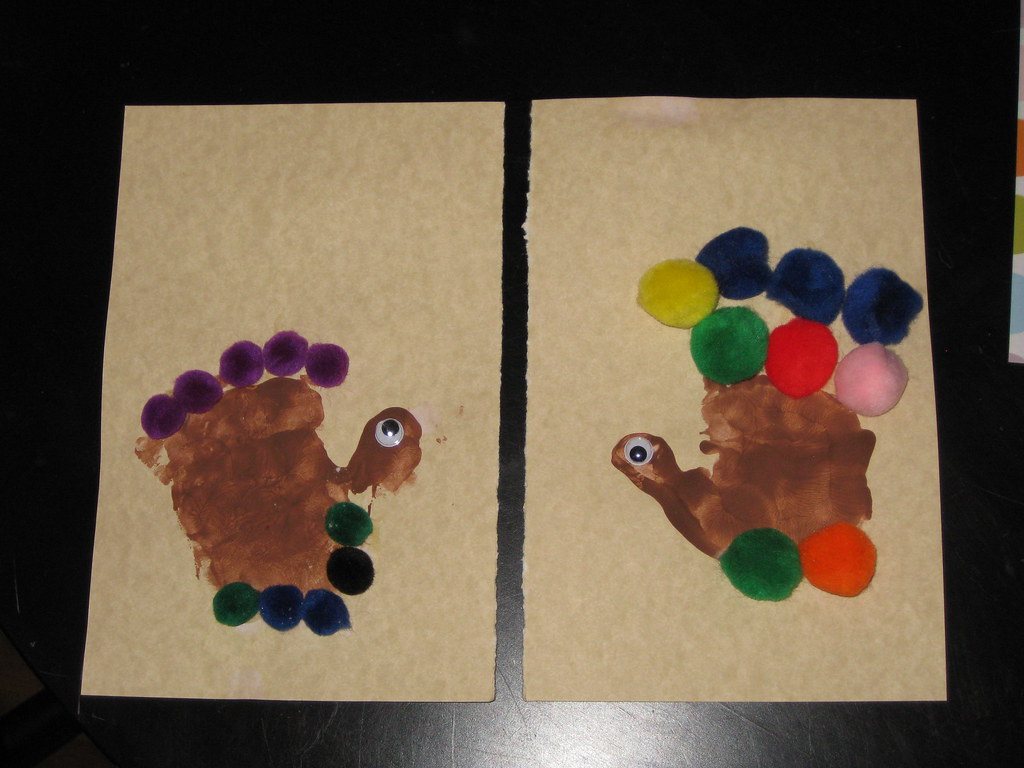
Print both turkey bodies, and one free template covers every child at your table, from a 2-year-old to an 11-year-old. That means one printout for mixed ages, not three different crafts. For each age band (2-4, 5-7, 8-11) you get who does the writing, which body to print, what to talk about while they work, and a homemade paint option.
Affiliate disclosure: Kids Art Magic may earn a commission from some links on this site. The links on this page go to free and reference sources.
What the thankful turkey craft is and where the free template comes from
The template is free from Fireflies and Mud Pies, which offers it for Thanksgiving classroom plans, family activities, or a simple gratitude project at home. Kids colour and cut out a turkey, glue the feathers to the back of the body, and fill the turkey with what they are thankful for.
The template comes with two bodies. One is pre-printed with “I am thankful for…” and the other is plain. The page also says it “Offers options for different skill levels”, running “from coloring for preschoolers to independent writing for older kids” (Fireflies and Mud Pies). So the age range is the source’s idea. This page adds the setup around it: which body each child gets, who holds the pencil, and the questions that turn a craft into a conversation.
Materials, time and mess level at a glance
Activity card
- Age bands: 2-4, 5-7, 8-11 (site bands, matched to the template’s own coloring-to-writing range)
- Prep time: 15 minutes to print and pre-cut for the youngest (suggested)
- Activity time: 20-30 minutes (suggested)
- Mess level: low with crayons and a glue stick. Medium with homemade paint, because of the wet paint (suggested)
- Skills: colouring, cutting, gluing and writing, which are the template’s own tasks
Materials
- The thankful turkey template, printed on cardstock. Use coloured cardstock, or white if kids will colour the pieces (Fireflies and Mud Pies)
- 1 copy per child, plus a spare sheet of feathers (suggested)
- 1 pair of child scissors per child (suggested)
- 1 glue stick per 2 children (suggested)
- 1 shared set of crayons or markers (suggested)
- A pencil for each writer
- Optional: homemade flour or cornstarch paint (see the paint section)
Steps
- Print the template on cardstock, coloured or white (Fireflies and Mud Pies). Use the pre-printed “I am thankful for…” body for early writers and the plain body for kids who will write their own opening line.
- Cut out the body, feathers, eyes, beak, wattle and feet. If a child isn’t using scissors yet, cut the face pieces before the session.
- If you printed on white, colour the pieces.
- Write or draw one thankful thing on each feather. Do this while the feathers lie flat. Writing is harder once they’re glued behind the body.
- Glue the feathers to the back of the body, as the template directs (Fireflies and Mud Pies).
- Glue the eyes, beak, wattle and feet to the front.
- Ask each child to explain one feather (prompts below).
If it goes wrong: If a child freezes at the writing step, use the source’s own fallback: “Younger children can dictate while an adult writes, or simply draw a picture instead” (Fireflies and Mud Pies).
Age-band guide: running it with 2-4, 5-7 and 8-11 year olds
For reference, HealthyChildren.org groups toddlers as ages 1-3, preschoolers as ages 3-5 and grade-school children as ages 5-12. NAEYC (the National Association for the Education of Young Children) focuses on children from birth through age 8.
This table lets one adult run the printable with every band at the same table.
| Band | Body to print | Who writes | Feather finish | Talk prompt (suggested) |
|---|---|---|---|---|
| 2-4 | Pre-printed “I am thankful for…” body | Child dictates while an adult writes, or the child draws a picture instead (Fireflies and Mud Pies) | Colour the template feathers, or paint them with flour or cornstarch paint (Wikipedia; suggested swap) | “Who did something kind for you today?” |
| 5-7 | Pre-printed body | Child writes a word or draws on each feather; adult spells on request (suggested) | Template feathers, coloured | “What’s one thing at home you’d miss?” |
| 8-11 | Plain body; child writes their own opening line (suggested) | Child writes, per the template’s “independent writing for older kids” (Fireflies and Mud Pies) | Template feathers, coloured | “What are you thankful for that most people forget about?” |
| Mixed group, one adult | Both bodies in one print run | Adult writes for the children who dictate first while older kids cut (suggested) | Shared crayons; paint only at the youngest child’s seat (suggested) | An older child asks a younger one, “Why that one?” (NAEYC guided play) |
The template has two weak spots. First, the eyes, beak, wattle and feet are separate cut-outs, so an adult has to do some prep before kids who aren’t cutting yet can start. Second, the pre-printed body fixes the opening words, which gives older writers less to do. The fix for the second is in the same download: the plain body. And because the template already covers everything from colouring to independent writing (Fireflies and Mud Pies), one print run covers the whole table. Use it if you’re running one craft for several ages at once.
Skip the writing, not the craft, if a child won’t write or draw on cue yet. The dictate-or-draw option keeps them in the activity.
Making it guided play: prompts that get kids talking about what they are thankful for
NAEYC describes guided play as a form of playful learning that sits between unstructured free play and direct instruction. Here that means the adult sets up the turkey, the feathers and a question, and the child supplies the answers.
- “Who helped you this week?”
- “What would you miss if it were gone tomorrow?”
- “What small thing made you smile today?”
- “Which feather would you show someone at dinner first?”
- “What are you thankful for that you can’t see or touch?”
After each answer, ask “Why that one?” before anything goes on the feather. Write down the child’s words exactly as they say them, so the feather stays theirs.
Painted-feather option for little hands: what fingerpaint sources say about homemade paint
According to Wikipedia’s fingerpaint entry, the paint can be made from household products such as flour or cornstarch. The entry is tagged as needing more citations, so treat it as a starting point, not a final word.
The same entry says some childcare facilities use instant pudding as fingerpaint (Wikipedia). That fits a paint-only turkey, where nobody writes on the feathers. It does not fit the writing version. If a young child paints their feathers, put their words on the pre-printed body’s “I am thankful for…” line instead.
Before mixing, read the flour, cornstarch or pudding package. Its ingredient list and any allergen statement tell you what the paint contains, which matters if anyone at the table has a food allergy. A homemade paint contains only what those labels list. On a store-bought paint, the label is where any safety seal or ingredient disclosure appears.
Related Thanksgiving crafts to pair with the thankful turkey
- Want open-ended art instead of a gratitude prompt? Try the Turkey Disguise Template, which the same page calls “a fun printable activity that lets kids get creative.”
- For the youngest crafters, the page links a Paper Strip Thanksgiving Craft, described as “a colorful paper project for little hands” (Fireflies and Mud Pies).
FAQ
Does NAEYC’s guided-play idea fit a 10-year-old?
NAEYC’s focus stops at age 8 (NAEYC), so its guidance wasn’t written for children aged 9-11. The prompts still work as plain conversation starters. Older kids can also take the adult’s role and ask a younger sibling the questions.
My child only wants to paint. Is that still the craft?
Yes. The source’s dictate-or-draw option means words aren’t required. A paint-only turkey is also the one place where pudding paint makes sense.
Where do the words go if the feathers are painted?
On the body. The pre-printed version already starts the sentence, and an adult can finish it as the child talks.
Print both bodies, pick one prompt, and start with the youngest child at the table.