Craft Safety for Kids: Why Every Craft Knife Stays in Adult Hands
Shamima's Workshop says an open-bladed craft knife "should never be used by a child," so the adult makes every blade cut and hands the piece back. Children get blunt-edge safety scissors instead, and sharp points stay away from children under the age of four.
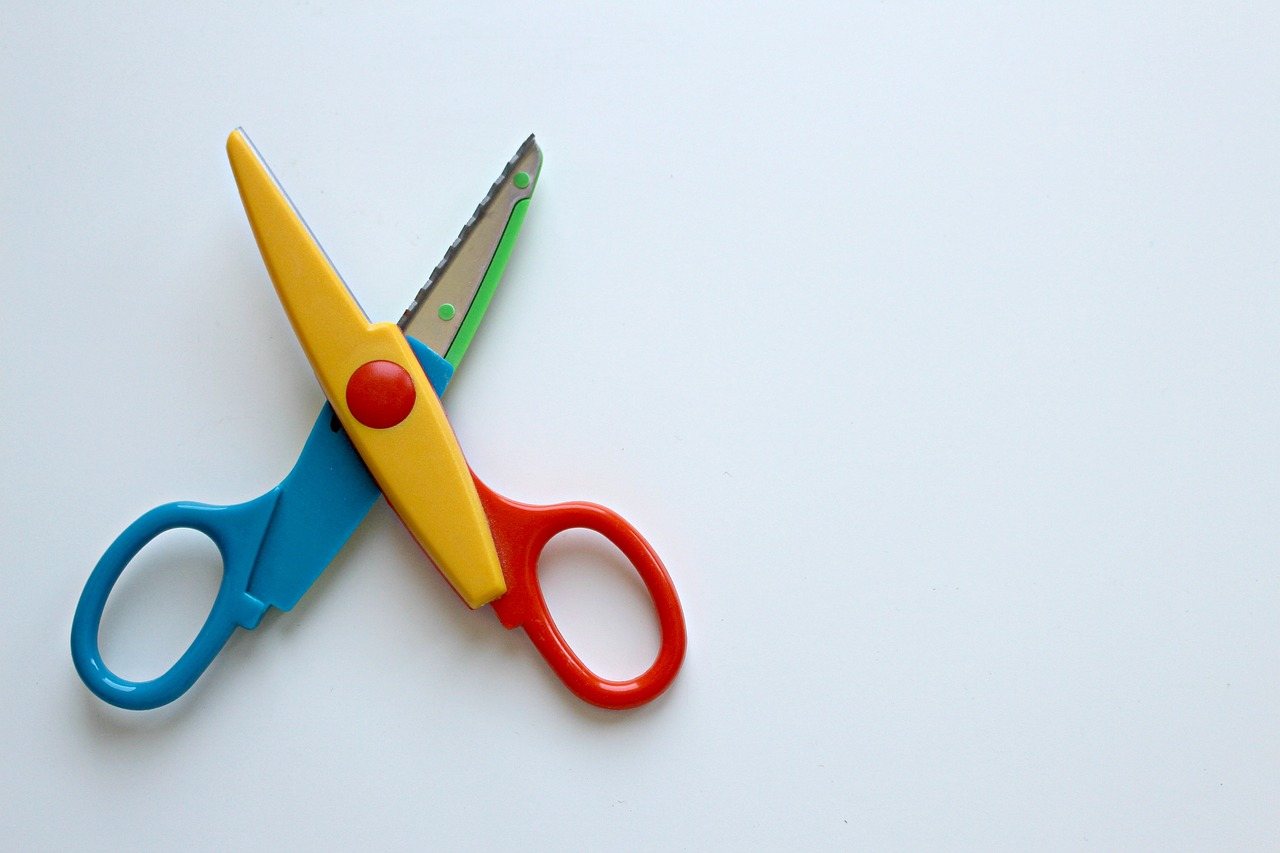
Craft safety for kids starts with blunt scissors in, craft knives out: your child gets the blunt pair, and every craft knife stays in adult hands. The quieter risk is in the air. When a project throws off dust or fumes, the room needs fresh air. Below you’ll find which scissors to pick, why knives stay adult-only, when to let air in, and one checklist that covers it all.
Give young children blunt-edge safety scissors, keep open-bladed knives away from every child, and open a window when a craft makes fumes or dust. Clean up when you finish. The checklist below puts the rules from four craft-safety pages into one routine for before, during and after a session.
Blunt-edge safety scissors for young children; no open-bladed craft knife for any child
For preschoolers and kindergartners, Family Focus Blog recommends child safety scissors with blunt edges, along with teaching the child how to use them properly. The right pair is half of that advice. The teaching is the other half.
The knife rule has no exceptions. Shamima’s Workshop says an open-bladed craft knife or a carving knife “should never be used by a child.” When a project needs a blade, the adult makes that cut and hands the piece back.
If a child isn’t cutting yet, put the scissors aside for now. Cut the shapes yourself and let the child do the gluing.
Fumes, vapors or dust mean the room needs fresh air, and an open window may be enough
Shamima’s Workshop says any craft activity that “produces fumes, vapors, or dust” needs enough ventilation, and that an open window may be enough. Decide this while you set up, not halfway through. If the materials will give off any of the three, open the window before the lids come off.
Treated wood and dried clay: even a little of their dust may be dangerous
The same page warns that “even little amounts of dust from treated wood or dried clay might be dangerous” (Shamima’s Workshop). That takes sanding treated wood, and sanding or scraping dried clay, off the list of jobs for kids.
Who should skip these projects: anyone whose plan calls for sanding treated wood or scraping dried clay. Do the glue, scissors and paper firetruck below instead.
Glove-wearing hand painters use toxic oils, not traditional fingerpaint
Wikipedia’s fingerpaint entry notes that adult artists who paint without brushes commonly wear surgical gloves “when using toxic oils,” and that “these artists do not use traditional fingerpaint.” Keep those oil paints with the adult supplies, out of a child’s kit.
End every session by cleaning the work area and putting blades away
Shamima’s Workshop says to clean the work area after the activity is finished. Do it before anyone leaves the table. Scissors go back in the kit, any adult blade goes back in its own place, and scraps and glue spills get wiped up.
If it goes wrong: if a craft knife keeps turning up in the kids’ supply box, give adult blades their own lidded box on a shelf the children can’t reach. Then the kids’ kit holds blunt scissors and nothing sharper.
An easy first project: the shape firetruck needs only glue, scissors and paper
According to Care.com’s fire-safety crafts for preschoolers, projects such as a shape firetruck need only glue, scissors and paper. Nothing on that list is treated wood, dried clay or oil paint. The firetruck theme also gives you a natural way to talk about fire safety while the child builds.
- Age: preschoolers (per Care.com)
- Materials (per Care.com): glue, scissors, paper
- Time: 20 minutes (suggested)
- Mess level: low (suggested)
- Skill it builds: cutting and gluing
The type of scissors comes from a different source. For this age, Family Focus Blog recommends child safety scissors with blunt edges.
The project still involves a blade, because it needs scissors, and Shamima’s Workshop says sharp points “should not be used near children under the age of four.” Give the child blunt-edge safety scissors instead of pointed ones, or cut the shapes yourself if the child can’t cut yet. With that change, the firetruck is a good first project for a preschooler.
One before, during and after checklist from four sources
Each line comes from one of four pages, linked where it appears. Read it once before you set out supplies.
- Before: Stock the kit with child safety scissors with blunt edges, and teach the child how to use them properly (Family Focus Blog).
- Before: Keep open-bladed craft knives and carving knives out of the kit. A child should never use one (Shamima’s Workshop).
- Before: Keep sharp points away from the table. They “should not be used near children under the age of four” (Shamima’s Workshop).
- Before: Leave out small components. They “should be avoided” in activities “involving children under the age of three” (Shamima’s Workshop).
- Before: If the craft will give off fumes, vapors or dust, open a window first (Shamima’s Workshop).
- Before: Don’t sand treated wood or dried clay. Even small amounts of that dust may be dangerous (Shamima’s Workshop).
- Before: Keep the toxic oil paints used by glove-wearing adult hand painters out of the kids’ kit (Wikipedia).
- During: Stay at the table. Young children should “always be supervised when using craft supplies” (Family Focus Blog).
- During: With heat tools, “let them assist you whenever possible” instead of handing the tool over (Family Focus Blog).
- After: Clean the work area once the activity is finished (Shamima’s Workshop).
- Next time: For the youngest, start with a glue, scissors and paper project such as the shape firetruck (Care.com).
On a supply label, look for a skin-use label and read the warnings first
- Skin use: use an item for skin painting only “if they are specifically labelled for that use,” per Shamima’s Workshop. A paint or marker without that label stays on paper.
- Warnings: read the product instructions and safety warnings “to yourself first, then to your children” (Shamima’s Workshop).
For more on this topic, see the Safety and materials guides.
Related reading: Before You Start Kid-Safe Crafts.
FAQ
Can an older child use a craft knife if an adult watches closely? No. Supervision is a separate rule on Family Focus Blog, not a way around the knife rule. Shamima’s Workshop says a child should never use one.
Which page does each rule come from? Family Focus Blog: scissors, supervision and heat tools. Shamima’s Workshop: knives, sharp points, small parts, ventilation, dust, labels and clean-up. Care.com: the firetruck project. Wikipedia’s fingerpaint entry: the line about gloves and toxic oils.
Where can I read more about preschoolers and play? HealthyChildren.org has a preschool section, NAEYC has a topic page on play, and the Art Institute of Chicago has a page for families.
Tape the checklist inside the lid of the craft box, where you’ll see it every time you set up.
Sources
- https://familyfocusblog.com/safety-tips-for-crafting-kids/
- https://www.shamimasworkshop.com/art-and-craft-safety
- https://www.care.com/c/easy-fire-safety-crafts-for-preschoolers/
- https://en.wikipedia.org/wiki/Finger_painting
- https://www.naeyc.org/resources/topics/play
- https://www.healthychildren.org/English/ages-stages/preschool/Pages/default.aspx
- https://www.artic.edu/learn-with-us/families